What Is Root Cause Analysis? Understanding the Real Reason Behind a Change
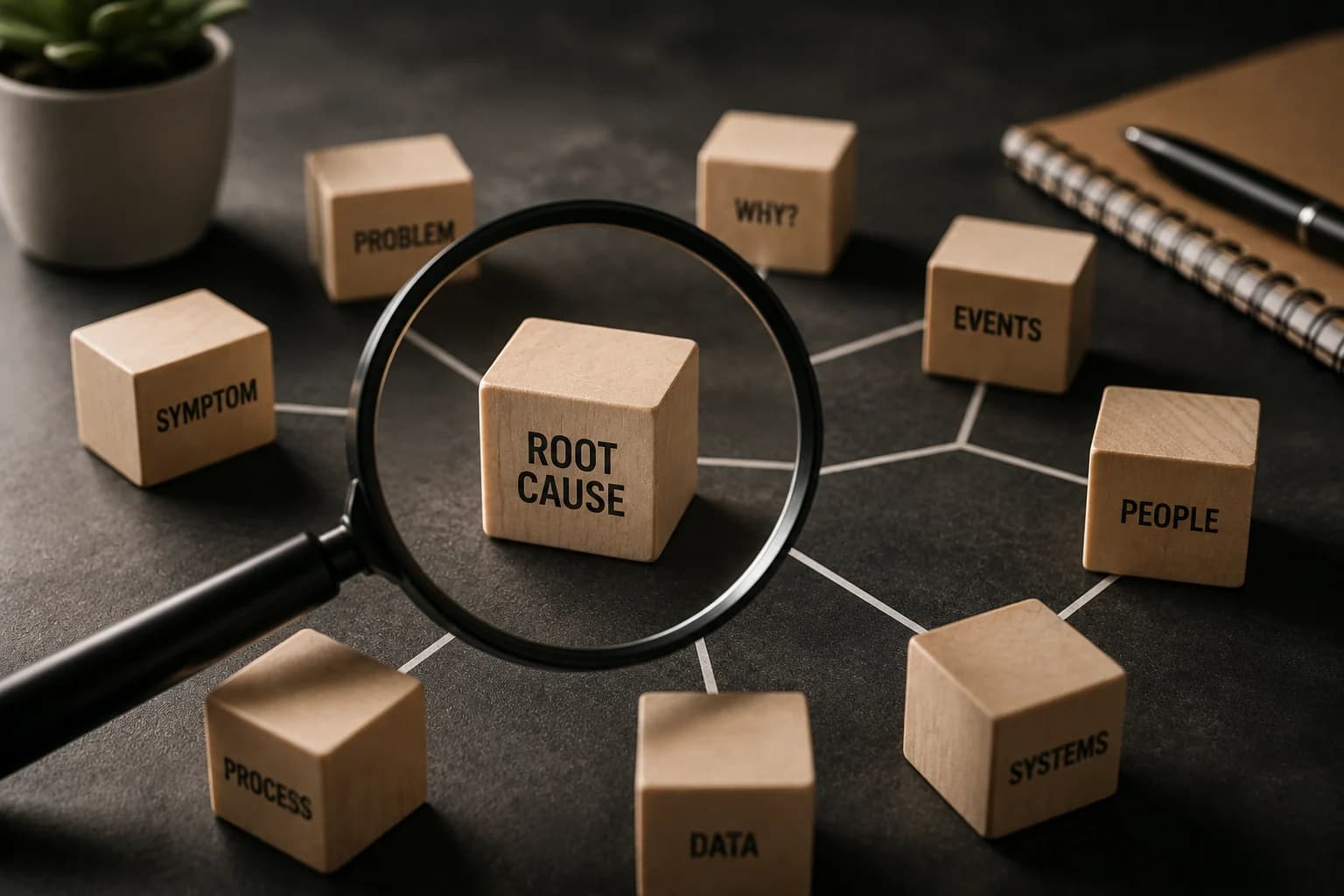
Negative conversation about a brand has increased. A person's perception has shifted. A topic has suddenly entered the agenda. A campaign's performance has dropped.
All of these show us what happened.
But what really needs to be known in order to decide is this:
Why did it happen?
Root cause analysis is an analytical approach aimed at uncovering the underlying reasons behind an observed change, problem or outcome.
The goal is not only to detect the outcome, but to understand the factors that produced it.
A Symptom and a Cause Are Not the Same Thing
Suppose the negative perception of a brand is rising.
At first glance the cause may look like customer complaints. But on closer inspection it may turn out that the complaints intensified after a particular product change, that a specific topic triggered the conversation, or that another development amplified the debate.
In that case the negativity is not the problem itself, but its result.
Root cause analysis tries to make exactly this distinction:
- What changed?
- When did the change begin?
- What happened beforehand?
- Which topic or event did it move together with?
- In which audiences did it concentrate?
- Which factors amplified the outcome?
Why Does the Question “Why?” Matter So Much?
Because the same outcome can arise from entirely different causes.
A brand's visibility may rise because it ran a successful campaign. Because a crisis began. Because an influencer mentioned the brand. Because a news story was published. Because something happened at a competitor.
The outcome is the same: visibility increased.
Yet the decision to be taken in each scenario is completely different.
There is therefore an important difference between analysis that only detects a change and analysis that can explain the reason behind it.
There May Not Be a Single Cause
Changes in the real world often do not stem from a single event.
Behind a shift in perception there may be news coverage, user experiences, social media conversations, particular actors, competitor moves or a broader agenda, all at once.
Advanced root cause analysis therefore requires assessing the relationships between different factors and their movement over time, rather than looking for one single reason.
Sometimes the most important finding is not which event occurred, but how different events combined to produce the outcome.
Knowing the Root Cause Changes the Decision
If you define a problem incorrectly, taking the right action becomes harder.
If the cause of negative perception is the product, you work on the product. If it is communication, you change the communication strategy. If a particular piece of misinformation is spreading, a different intervention is needed. If the movement is being amplified artificially, you read the picture in a completely different way.
Root cause analysis therefore matters not only for explaining the past, but for deciding more accurately what to do next.
Knowing what happened shows you the picture. Knowing why it happened lets you change it.