What Is Political Analysis? The Difference Between Following Politics and Understanding It
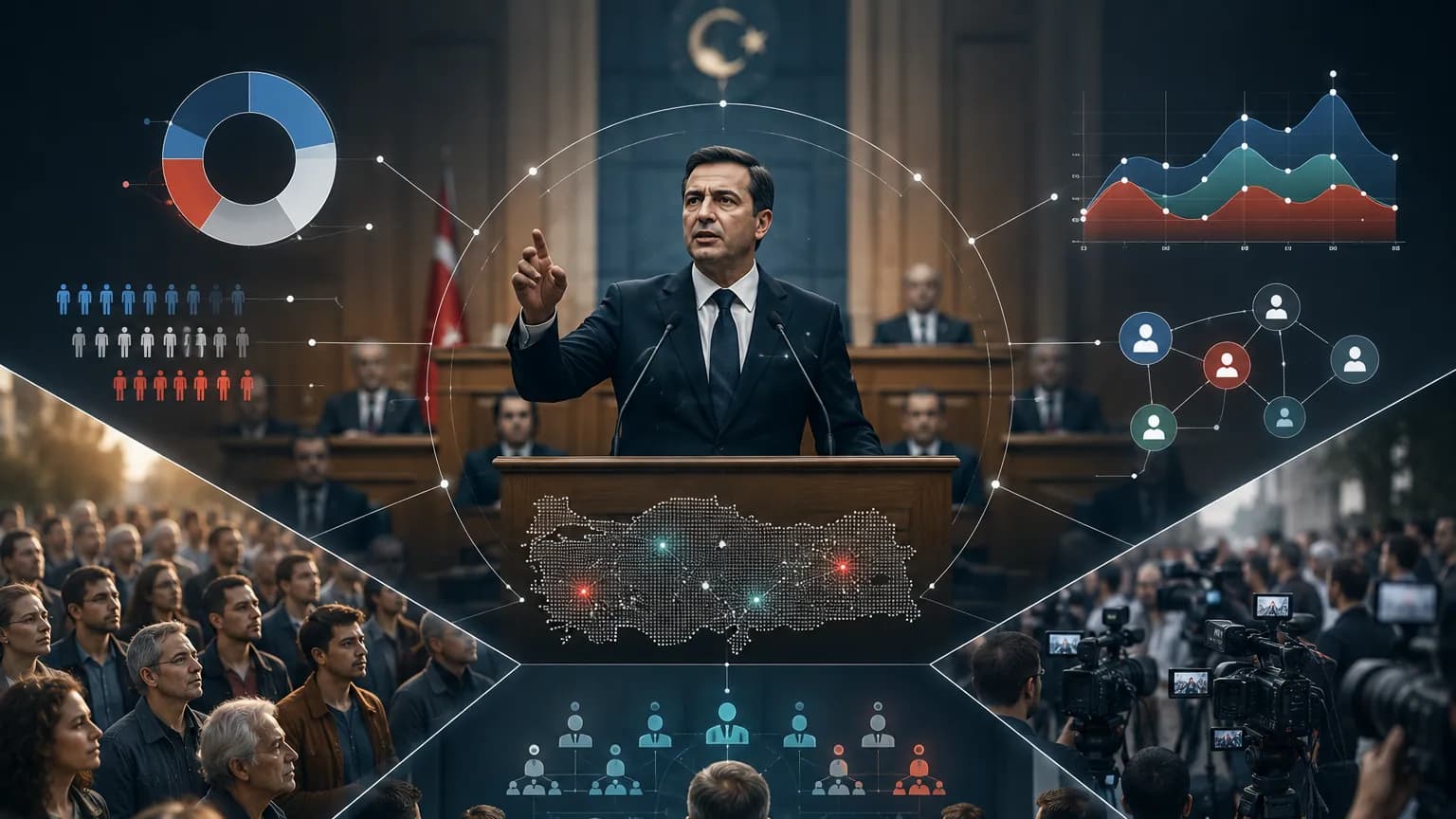
Following politics is easy.
- Who said what?
- Which issue is on the agenda?
- Which statement was discussed most?
- Which political figure gained visibility?
All of this can be seen.
But what matters for political analysis is being able to understand what lies behind the visible developments.
Political analysis is the analytical process that reads political actors, public opinion, the media, the agenda and social reactions together in order to understand the reasons for change in politics and the direction it is taking.
Because in politics what matters is not only what happened, but why it happened and how it was received.
Visibility Does Not Mean Power or Support
A political figure may sit at the centre of the agenda for a whole week.
Thousands of news items may be published and millions of interactions may form on social media.
But high visibility does not have to mean high support, favourable perception or political power.
Without weighing the content of the conversations, people's stance, the structure of support and opposition, the reasons behind criticism and the change over time, an interpretation built on visibility alone can remain incomplete.
Not What the Public Thinks, but Why It Thinks So
Seeing that perception of a political figure has changed is only the starting point.
The real questions come after that:
- Which development changed the perception?
- Which messages resonated?
- Which issues are generating criticism?
- What are people's expectations?
- Who supports, and who opposes?
- What are the core reservations of the undecided?
Because support for the very same political figure can rest on entirely different reasons for different people.
Political analysis tries to make those differences visible.
Do Citizens, Media and the Party Organisation See the Same Thing?
One of the most critical distinctions in politics emerges here.
A development may be welcomed by citizens while being framed differently in the media. The assessment of the organisation on the ground may differ completely from both.
Looking only at the general public opinion picture is therefore not enough.
When the citizen's perception, the image created by the media and the organisation's on-the-ground assessment are read together, a far more meaningful political picture can emerge.
Sometimes the most important finding is not the alignment between these three, but the divergence.
Is Following Your Rival Enough?
It is easy to know how many statements a rival made, which issues they pushed onto the agenda or how visible they were.
What is more valuable is being able to see the answers to these questions:
- On which issues are they gaining strength?
- Which of their messages are resonating?
- Which audiences are they starting to reach?
- In which areas are they changing strategy?
- Do the areas where you are weakening overlap with the areas where they are strengthening?
Because rival analysis is not merely tracking a rival's moves.
Do not follow your rival. See their strategy.
Not What the Agenda Is, but What Shapes It
A political agenda does not always form on its own.
A statement, a news story, a social development, an economic shift or a digital movement can change the direction of the agenda.
Some issues disappear within a few hours, while others grow by spreading to different communities.
Political analysis should therefore not settle for listing the headlines on the agenda.
Who started the agenda, who amplified it, which events fed it and why it resonated in society all matter too.
Is a Crisis Only Visible Once It Has Begun?
A political crisis often looks as though it appeared out of nowhere.
Yet small signals may exist beforehand.
A particular criticism starting to recur, negative sentiment rising within a specific audience, new actors entering the debate, or an issue spreading at an unusual speed…
None of these on its own amounts to a crisis.
But once they start moving together, they can herald a much larger change.
This is why political analysis can be used not only to explain past crises, but to notice new risks earlier.
How Do People Define a Political Figure?
Political perception is not merely favourable, unfavourable or neutral.
People may associate a leader with being trustworthy, strong, sincere, decisive, successful, approachable, or with exactly the opposite qualities.
This perception of character can shift over time.
More importantly, a gap can open between what people expect from a political figure and how they see them today.
The wider that gap grows, the more significant a signal it becomes for political communication.
Political Analysis Is Not a Verdict but Decision Support
Political analysis does not state the future with certainty, nor does it reduce human behaviour to a single cause.
Its value lies in making the changes, relationships, risks, opportunities and early signals within a complex political environment more visible.
And strong political analysis should not offer only an interpretation.
It must also be able to show which data and findings its conclusion rests on.
Following politics shows what happened. Political analysis tries to understand why it happened and where it is changing.